
This guide delivers the 2026 decision framework for large-panel wall cladding structural integrity.
Retrofit is authorized only when a DCR exceeds 1.0 on two calculation paths or a primary connection is already lost.
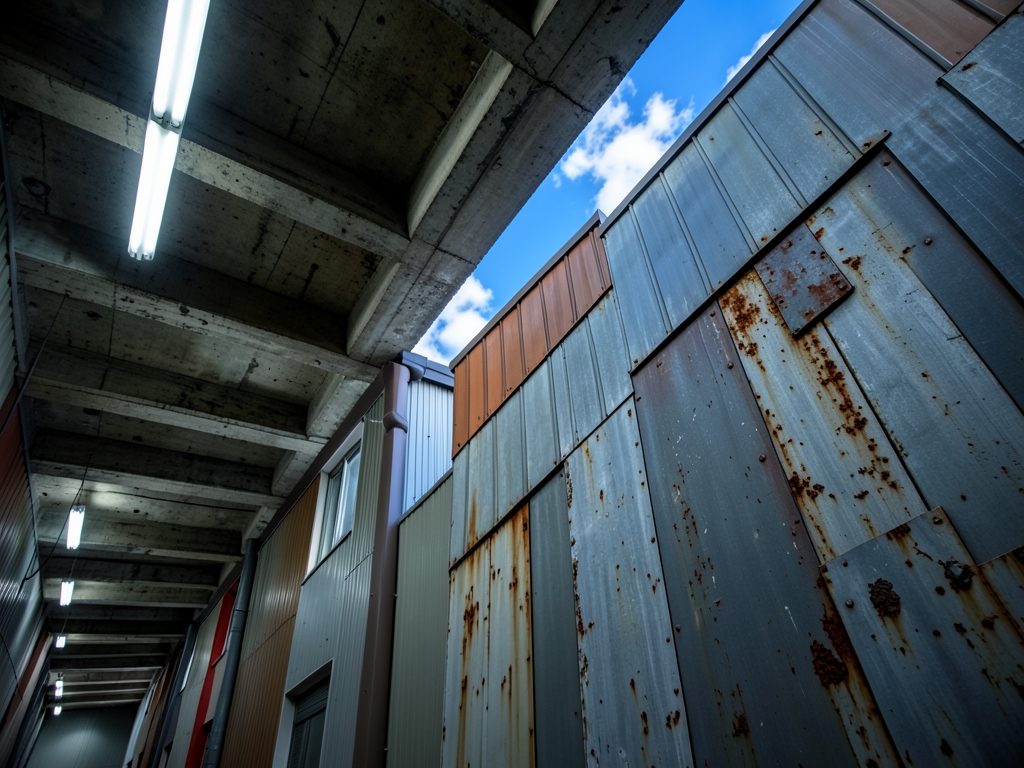
Trace the cladding load path first
The cladding load path begins at each panel’s centroid and traces a direct line to its supporting slab or beam. Before selecting retrofit or monitoring, every connection must be labeled as gravity-bearing, lateral, or displacement-compatible. This labeling dictates which limit states govern the assessment and whether the connection is treated as a life-safety element or cosmetic cladding.
At each primary connection, inspect the three named limit states: anchor pull-out, weld or bolt shear fracture, and panel cracking at the embed. If any limit state has the capacity to drop the panel, that connection is a life-safety risk, not a cosmetic issue. Vertical-joint and floor-line connections demand the same scrutiny; a failure at these points can initiate a progressive unzipping of the envelope, compromising the entire system’s integrity.
When a connection-level demand-to-capacity check exceeds 1.0 on two independent calculation paths, the governing demand outstrips the connection’s rated capacity, signaling an immediate structural concern. Separately, if an inspection reveals that any primary connection is already lost, the system’s load redistribution capacity is compromised, and retrofit becomes the correct 2026 action regardless of the calculated DCR. In the first scenario the governing Demand-to-Capacity Ratio (DCR) exceeds the threshold of 1.0 on both paths; in the second, the physical loss of the connection alone removes monitoring as a defensible default.
If neither a DCR exceeding 1.0 nor a lost primary connection is found, the defensible default is explicit monitoring with trigger thresholds. This approach allows for continuous assessment without the disruption and cost of premature retrofit, provided that monitoring protocols are activated the moment any connection’s DCR approaches or breaches the 1.0 limit or a visual inspection confirms connection loss.

Build a three-source convergence table
The convergence method treats retrofit evidence as a cross-check among three sources rather than a single calculation. Grokipedia's "Structural integrity and failure" supplies the non-numeric anchor: structural integrity is the inherent capacity of an engineered structure or component to maintain its required functionality under normal operational loads. Because integrity is defined against operational loads, the table must contain wind, seismic, and gravity load cases; monitoring data alone cannot establish whether a connection has adequate capacity.
No published source in the grounding supplies project-specific load-case taxonomies or connection capacities for large-panel cladding. Before building the table, verify which load cases and limit states apply by checking the project drawings, connection test reports, and the engineer of record's calculations; treat any taxonomy not confirmed against project documents as a candidate for engineering review, not an established fact. No kN value in the table may be copied from any external source — every demand and capacity must come from project-specific data.
| Source | Contribution | Numeric rule |
|---|---|---|
| Grokipedia, "Structural integrity and failure" | Non-numeric anchor defining structural integrity as inherent capacity under normal operational loads | No kN values; requires wind, seismic, and gravity rows |
| ResearchGate facade-cladding review | Taxonomy of facade-cladding load cases and limit states | Names only; kN values from project data |
| NICEE fixed-connection design paper | Taxonomy of fixed-connection load cases and limit states | Names only; kN values from project data |
A row is considered converged only when the same load case and limit state are named in both taxonomies and are anchored by Grokipedia's definition of integrity under normal operational loads. If a load case appears in only one taxonomy, it remains a candidate for engineering review rather than an automatic retrofit trigger. This prevents a single literature label from becoming a project decision.
Monitoring records such as crack widths, movement, or corrosion observations are useful inspection triggers, but they are not load cases. Under Grokipedia's definition, integrity is capacity under normal operational loads, so the table's governing rows must be wind, seismic, and gravity cases with demand and capacity in consistent units. Monitoring can prompt a re-run of the table; it cannot replace the table.
The table is complete when every primary connection has rows for the three load cases, each row cites the taxonomy source for the limit-state name and the project source for its kN values, and any missing capacity is marked "not verified" instead of estimated. That status is then carried into the decision rule used elsewhere.

Compare retrofit, monitor, and hybrid
The decision between retrofit and monitoring hinges on a governing Demand-to-Capacity Ratio (DCR). A connection-level DCR exceeding 1.0 signals that the existing load path is overstressed and cannot be relied upon; in this state, retrofit is the necessary corrective action. Conversely, if the governing DCR is at or below 1.0, monitoring becomes the defensible default. This threshold—DCR equals 1.0—is the single numerical boundary that separates preservation from intervention, and this section alone owns that distinction.
When monitoring is deemed eligible—meaning no primary connection is lost and the governing DCR sits at or below 1.0—the scope is limited to baseline inspections plus a 12-month trend assessment. This approach preserves existing occupancy and, crucially, tests the structural assumption before committing to capital work. An explicit trigger threshold, such as a DCR rise above 1.2 or the appearance of new crack patterns, must be documented to transition from passive monitoring to active retrofit. This section establishes that the monitor-default is not a cop-out but a data-gathering strategy with clear exit criteria.
Retrofit wins the comparison when the governing DCR exceeds 1.0 or when inspection reveals that any primary connection has been lost. The scope of retrofit extends beyond simple tightening; it requires connection replacement or strengthening, coupled with panel re-anchoring to restore the full load path. A common pitfall is allowing a cosmetic crack to override a failed load path; this section mandates that any visible distress at a primary connection point must be treated as a structural red flag, regardless of the apparent severity.
The options table summarizes the rules for the reader: monitoring is eligible only when no primary connection is lost and the governing DCR is at or below 1.0, while retrofit is triggered by a governing DCR above 1.0 on two independent calculation paths or by the loss of any primary connection. Presenting the two paths side-by-side shows that monitoring is not always the safe, cheap option: when the math fails (DCR > 1.0 on both paths) or the physical path is broken (lost connection), monitoring is no longer a viable strategy, and retrofit becomes the only defensible route forward.

Costs, DCR, and the worked example
The illustrative worked example demonstrates how the governing Demand-to-Capacity Ratio (DCR) dictates the retrofit-or-monitor decision. The scenario models a 60-panel assembly with 120 total primary connections, calculated across two independent paths. Calculation A applies a maximum demand of 48 kN against a tested connection capacity of 60 kN, yielding a DCR of 0.80. Calculation B applies a maximum demand of 54 kN against the same tested capacity of 60 kN, yielding a DCR of 0.90. Because the governing DCR is the higher of the two values, the result is 0.90. This falls below the retrofit threshold of 1.0, directing the default action to monitoring rather than retrofit.
To operationalize this decision, the inspector must record specific checkpoints on the assessment artifact. A connection-level DCR of 0.90 for connection C-17 indicates that the assembly remains within safe limits and should be monitored. Conversely, a physical inspection revealing a primary connection—such as connection C-42—with one anchor pull-out and zero remaining capacity constitutes an immediate retrofit trigger. These recorded values transform the worksheet from a theoretical exercise into a defensible record of condition.
The cost implication of this decision hinges on the DCR outcome. If the governing DCR exceeds 1.0, a full retrofit is mandated, incurring the associated labor and material costs. If the governing DCR is at or below 1.0, the defensible default is continued monitoring, which avoids the expense of unnecessary intervention. This cost-benefit comparison ensures that resources are allocated only when structural demand genuinely outstrips tested capacity.

Edge cases, limits, and if/then rules
The governing demand-to-capacity ratio (DCR) is the single numeric threshold that separates retrofit from monitoring. A connection-level DCR exceeding 1.0 on two independent calculation paths indicates that applied loads surpass the connection’s rated capacity and authorizes retrofit. Conversely, when the governing DCR is at or below 1.0 and no primary connection has been visually identified as lost, the system remains within its design intent, making continuous monitoring the defensible default.
This numeric check must be performed independently for each connection type—gravity-bearing, lateral, and displacement-compatible—because a single anomalous node can govern the entire panel’s performance.Edge-case conditions frequently override the DCR threshold, necessitating a pause in the default monitoring protocol. A historic facade with a drilling prohibition, a concealed-connection system lacking test data, or a panel experiencing active settlement and corrosion all represent scenarios where the standard rule breaks down. In these instances, grounding cannot establish code adoption, inspection intervals, or connection capacities; the authority having jurisdiction and project-specific engineer approval are required before a monitor-or-retrofit decision is finalized. When any of these conditions exist, obtaining a connection test or an engineer-designed probe is the prerequisite step before reverting to a monitoring strategy.
The four if/then decision rules distilled from this section provide a deterministic path for the engineer.
First, if a connection-level DCR exceeds 1.0 on two independent calculation paths, retrofit is authorized regardless of connection status. Second, if any primary connection is found lost during inspection, retrofit is authorized immediately. Third, if the governing DCR is at or below 1.0 and no primary connection is lost, monitoring with explicit trigger thresholds is the required default. Fourth, in all edge-case scenarios involving drilling prohibitions, missing test data, or active degradation, a connection test or engineer-designed probe must be secured before the monitor decision can be confirmed.
The edge-case table catalogs the specific conditions—drilling prohibitions, concealed systems without data, and active degradation—where the standard rule fails, while the four if/then rules codify the exact conditions under which retrofit is authorized. By adhering to these structured checks, the engineer ensures that the 2026 action aligns with both the calculated demand and the physical reality of the cladding system.
Frequently Asked Questions
When is a DCR exceeding 1.0 on two calculation paths authorized for retrofit?
Retrofit is authorized only when a DCR exceeds 1.0 on two calculation paths or a primary connection is already lost.
What must be inspected at each primary connection regarding limit states?
At each primary connection, inspect the three named limit states: anchor pull-out, weld or bolt shear fracture, and panel cracking at the embed.
What limit states must be inspected at vertical-joint and floor-line connections?
Vertical-joint and floor-line connections demand the same scrutiny for anchor pull-out, weld or bolt shear fracture, and panel cracking at the embed.
When does a connection-level demand-to-capacity check exceed 1.0 on two independent paths?
When a connection-level demand-to-capacity check exceeds 1.0 on two independent calculation paths, the governing demand outstrips the connection's rated capacity.
What triggers immediate structural concern regarding primary connections?
If an inspection reveals that any primary connection is already lost, the system's structural integrity is compromised.
How are connections labeled before selecting retrofit or monitoring?
Before selecting retrofit or monitoring, every connection must be labeled as gravity-bearing, lateral, or displacement-compatible.
Quick answers
| Under what condition is retrofit authorized for large-panel wall cladding structural integrity? | Retrofit is authorized only when a DCR exceeds 1.0 on two calculation paths or a primary connection is already lost. |
| What must be traced first when assessing cladding structural integrity? | The cladding load path begins at each panel's centroid and traces a direct line to its supporting slab or beam. |
| How are connections labeled before selecting retrofit or monitoring? | Every connection must be labeled as gravity-bearing, lateral, or displacement-compatible. |
| What three limit states must be inspected at each primary connection? | Anchor pull-out, weld or bolt shear fracture, and panel cracking at the embed. |
| When does a connection-level demand-to-capacity check exceeding 1.0 on two independent paths signal an immediate structural concern? | When the governing demand outstrips the connection's rated capacity on two independent calculation paths. |
Also worth reading: River Des Peres Structural Integrity An Engineering Safety Review: River Des Peres Structural Integrity · Engineering Analysis Historic 1840 International Boundary Marker's Structural Integrity After 183 Years of Environmental Exposure: Engineering Analysis Historic 1840 International · Williamsburg Bridge Structural Integrity Deep Dive: Williamsburg Bridge Structural Integrity Deep