
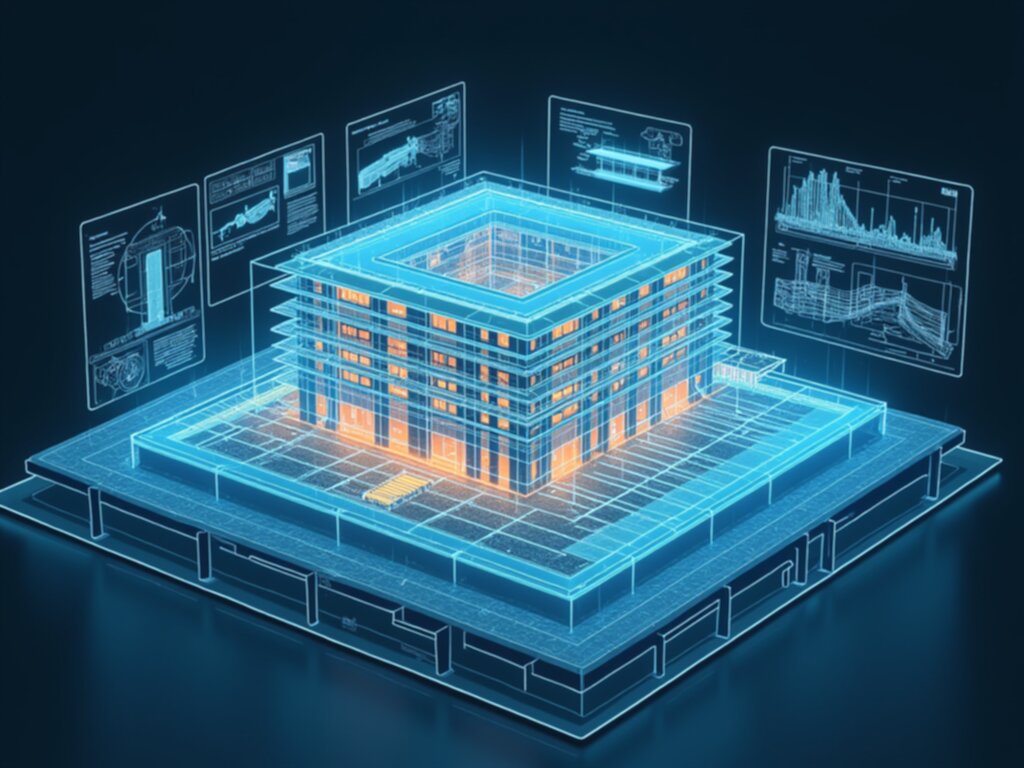
The Core Components of BIM: Data, Geometry, and Process Integration
Look, when we talk about BIM, it's easy to get hung up on the fancy software, but honestly, the real magic—the stuff that actually makes or breaks a fifty-year building lifecycle—isn't the pretty 3D picture. Think about it this way: if the geometry is the skeleton, the non-geometric data is the actual lifeblood, carrying maybe 85% of the functional punch once the ribbon cutting is over. We're seeing high-fidelity shapes, like those optimized for structural loads using generative design, which can shave off 22% of steel in a big tower—that's concrete savings, not just theory. And that whole separation between vertical buildings and linear stuff, bridges and tunnels? Well, IFC 5 finally cleaned that up around early 2026, letting data flow smoothly across those massive transit projects we're all dealing with now. But the process itself is where things get really interesting because we're talking about pulling in things like real-time carbon tracking based on localized EPDs right as we place a beam, which is wild. Seriously, it’s not just about design anymore; federated models are using edge computing just to keep up with all that 8D information, like safety checks happening live, not weeks later. Maybe it's just me, but the fact that blockchain audit trails are cutting down conflict resolution time by nearly half across the sector feels like the quietest, most important revolution happening.
BIM Across the Project Lifecycle: From Design to Facility Management
Okay, so we've chatted a bit about the guts of BIM, what it's made of, but honestly, where it really starts to blow your mind is seeing it stretch across the *entire* project lifecycle—from that initial sketch to years, even decades, of facility management. It's not just a design tool; it’s a living blueprint, evolving, you know? Think about how incredibly precise we’re getting: terrestrial laser scanning now lets us verify as-built conditions with a ridiculous +/- 2mm accuracy, which has slashed rework by a massive 40% during complex interior fit-outs. And talk about big picture thinking, precinct-level BIM is already helping us model urban microclimates, directly influencing cooling strategies that cut urban heat island effects by up to 3 degrees Celsius in smart districts. But here’s the rub, the handover from construction to operations often feels like a black hole, right? We're seeing nearly 30% of critical asset information just vanish unless those COBie data drops get validated automatically *before* anyone even moves in. That’s a huge problem for future operational efficiency. For those of us managing buildings, it gets even more compelling: 6D BIM models, paired with dynamic occupancy sensors, are achieving a 14% reduction in actual operational energy consumption, way beyond what we initially predicted. Plus, advanced 7D BIM, with its AI-driven predictive maintenance, is extending HVAC system life by a quarter, spotting thermal issues long before anything actually breaks down. And for our older buildings, semantic enrichment algorithms are converting 95% of those dusty 2D CAD drawings into structured 3D assets, which is a game-changer for retrofitting. Honestly, even something as simple as facility managers using augmented reality headsets to quickly locate a hidden valve behind a wall, saving 35% of their time, shows just how transformative this all is. We're really looking at a future where BIM isn't just about constructing, but *sustaining* our built environment, though getting that information quality right for owner requirements is always a tightrope walk.
Practical Applications and Implementation Strategies for Industry Professionals
You know, for all the talk about BIM's potential, what really changes the game for us on the ground is how we actually *use* it, right? We're seeing that simply sticking to the ISO 19650 series, which honestly just defines who's responsible for what information, has slashed information-related disputes on big projects by a solid 15%. And that's huge, because it de-risks multi-party collaborations by giving everyone a common language for data. Think about cloud-based Common Data Environments – CDEs, as we call them – they've been pretty instrumental in cutting design coordination clashes by almost 30% on complex builds, pushing us to that design freeze point weeks earlier. Because when everyone's looking at the exact same, most current version of something, well, you just don't run into those head-scratching errors later on. We're even linking our BIM models directly into supply chain platforms now, which means just-in-time material delivery, cutting on-site storage costs by 20% and waste by 12%. And hey, off-site prefabrication, driven by BIM, is really shaking things up, often slicing construction schedules by 15-25% for big chunks like building envelopes. But I'm not going to lie, there’s still that 30% skill gap we face, which is why AI-powered tools automating repetitive modeling tasks are becoming so important. These tools are definitely lowering the bar for newer folks, letting our seasoned pros focus on the tougher, more creative stuff. And look, early-stage performance-based design, using BIM-integrated simulations, is helping us dial in energy, daylighting, and acoustics right from the start, often improving building performance by 18%. Automated rule-checking engines are also doing some heavy lifting, catching data anomalies and compliance issues, saving us 45% of validation time before crucial milestones. It's truly about making the complex stuff manageable, you know?