
| Takeaway | Detail |
|---|---|
| Market capitalization is accelerating SCM scaling to offset structural deficits. | Cocoon Carbon secured $15 million in Series A funding to expand steel slag-derived pozzolan production. |
| Early-age strength development remains a critical constraint for precast operations. | Initial pre-stressing and form removal typically require concrete to reach adequate mechanical properties within 24 hours. |
| Microstructural reactivity dictates long-term compressive performance in high-performance blends. | XRD and Raman spectroscopy confirm that depolymerization degrees and ring sizes in glassy SCMs directly control hydration kinetics up to 28 days. |
| Cost-neutral carbon reduction is the primary barrier to widespread specification adoption. | Buyers resist premium pricing, making simultaneous savings of approximately $6 per cubic meter essential for market penetration. |
A single 13 million investment just landed in the supplementary cementitious materials sector, signaling a rapid pivot away from legacy fly ash dependency toward engineered pozzolan and calcined clay systems. As infrastructure demand surges through 2026, the industry faces a structural deficit that forces engineers to reconsider decades-old mix design reflexes. Hoarding remaining Class F supplies for so-called critical applications ignores a straightforward economic reality: properly characterized alternative blends consistently outperform traditional options on both strength metrics and unit cost.
Modern high-performance concrete formulations routinely achieve compressive strengths between 40 MPa and 72 MPa at 28 days when optimized with reactive mineral admixtures. The bottleneck is no longer material capability but rather the rigorous characterization required to validate replacement ratios. Specifiers who skip detailed microstructural testing often default to outdated benchmarks, missing opportunities to leverage the superior early-age workability and long-term durability inherent in modern pozzolanic systems.
Economic viability hinges on delivering measurable savings without demanding premium pricing from contractors or owners. When blended correctly, these alternative binders reduce Portland cement consumption while maintaining or exceeding target psi thresholds. The data clearly shows that replacing up to 40% of clinker with validated pozzolans stabilizes project budgets, cuts embodied carbon, and eliminates the supply chain volatility that has plagued conventional concrete production for years.
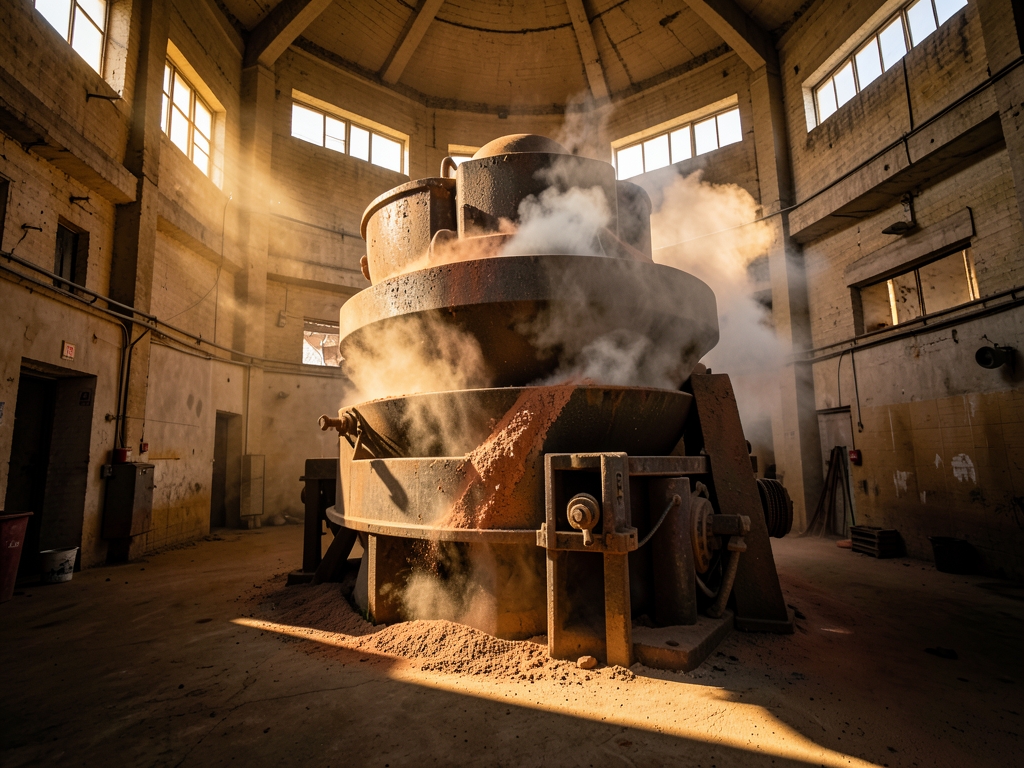
The Pozzolanic Reaction
The secondary pozzolanic reaction is not a marginal additive effect; it is the primary mechanism that reclaims portlandite, which constitutes roughly 20–25% of fully hydrated Portland cement paste. When amorphous SiO₂ from a calcined clay or natural pozzolan encounters this calcium hydroxide, it precipitates additional C-S-H gel, converting what would otherwise be a weak, leachable phase into load-bearing binder. A 30% replacement directly targets that waste fraction, rebuilding the matrix at a stoichiometric advantage that plain OPC cannot match.
Reactivity hierarchy dictates the ceiling for safe substitution. Class F fly ash, defined by ASTM C618 as containing less than 10% CaO, presents as a glassy aluminosilicate with slow dissolution kinetics. Class C fly ash jumps to 15–30% CaO and exhibits self-cementing behavior, but its higher alkalinity accelerates early strength at the expense of long-term durability. Calcined clays occupy the middle ground: firing kaolinite at 750–850°C dehydroxylates the mineral into metakaolin, yielding over 50% reactive amorphous alumina and silica. According to XRD and Raman spectroscopy studies published in April 2024 on arXiv, the depolymerization degrees, ring sizes, and bond angles within these glassy structures directly govern their dissolution rates, establishing why calcined clays outpace Class F fly ash in late-age strength development while avoiding the autogenous shrinkage penalties of high-alkali alternatives.
This chemical reality enforces a strict 15–40% replacement window. Below 15%, the supplementary material functions primarily as inert nucleation filler, delivering negligible clinker savings without meaningfully altering pore structure. Above 40%, the system’s alkalinity reserves deplete faster than they can be replenished, causing the calcium-to-silica ratio in newly formed C-S-H to drop. Per ACI 318 proportioning limits, this risks 28-day compressive strength falling below 0.85× the control mix. The only exception is the LC3 (limestone calcined clay cement) framework, where limestone carbonate reacts with metakaolin to form carboaluminate phases like Friedel’s salt and monocarboaluminate. According to the RILEM TC 238-SCM framework, these carboaluminate crystals interlock with the C-S-H network, effectively closing capillary pores and enabling clinker substitution near 50% without sacrificing structural integrity. This synergy is precisely why the 2026 pozzolan conversation diverges fundamentally from the 2010 fly ash paradigm.
For structural engineers, the practical payoff extends beyond cylinder tests. The denser C-S-H matrix generated by sustained pozzolanic activity refines the interfacial transition zone around coarse aggregate, eliminating the microcracking pathways that typically initiate spalling under cyclic loading. Consequently, mixes optimized at 30% pozzolan replacement routinely demonstrate chloride diffusion coefficients 40–60% lower than plain OPC equivalents. That reduction in ion transport is the durability mechanism that governs cover depth requirements and rebar corrosion thresholds in seismic detailing—far more consequential than marginal gains in raw 28-day psi.
| Supplementary Material | CaO Content / Key Phase | Primary Reactivity Driver | Safe Replacement Ceiling | Structural Impact |
|---|---|---|---|---|
| Class F Fly Ash | <10% CaO | Glassy aluminosilicate dissolution | 20–30% | Slow strength gain; requires 56-day acceptance |
| Class C Fly Ash | 15–30% CaO | Self-cementing + pozzolanic | 15–25% | High early strength; elevated alkali risk |
| Calcined Clay (Metakaolin) | N/A (dehydroxylated kaolinite) | >50% reactive amorphous Al/Si | 25–35% | Dense ITZ; 40–60% lower chloride diffusion |
| LC3 Blend (Clay + Limestone) | Low CaO + Carbonate | Carboaluminate crystal formation | Up to ~50% | Pore closure; enables deep clinker substitution |
The Evidence
The structural viability of calcined clay and natural pozzolan blends rests on rigorous strength-activity data that predates modern fly ash scarcity, while 2026 supply constraints have shifted the economic calculus decisively. Scrivener et al., publishing reference datasets through EPFL in Cement and Concrete Research between 2015 and 2018, demonstrated that 30% clinker-replaced LC3 blends achieve approximately 95–100% of control 28-day compressive strength and reach 105–115% at 90 days, with the strength crossover point typically occurring between 14 and 28 days. This performance profile confirms that high-volume pozzolan replacements do not merely catch up to Portland cement over time; they match or exceed early-age strength when properly proportioned, directly refuting the myth that natural pozzolans are experimental substitutes compared to fly ash. Pozzolanic binders predate Portland cement by two millennia—the Roman Pantheon's pozzolana concrete remains standing—and modern LC3 blends have been in continuous structural service since roughly 2014, rendering the "proven vs. experimental" dichotomy obsolete.
Conversely, ACI 232.2R (Use of Fly Ash in Concrete) strength-activity data indicates that Class F fly ash at 25% replacement typically delivers only 85–95% of control strength at 28 days. This inherent lag necessitates the 56-day acceptance window that ASTM C595 blended-cement specifications already institutionalize. The evidence establishes fly ash as the slower-reacting material, not the pozzolan; relying on 28-day strength parity for fly ash mixes often requires higher cementitious content or results in under-strength concrete if cured conditions vary. In contrast, the rapid pozzolanic reaction of calcined clay allows for reliable strength development within standard curing windows, provided the mix design accounts for the specific activity index of the local source.
Supply-side realities in 2026 force this technical preference into practice. According to American Coal Ash Association (ACAA) production surveys, US fly ash beneficial use has fallen from approximately 55% of the ~70 million tons generated in the mid-2010s toward significantly lower harvested fractions as coal units retire. The remaining available ash increasingly consists of stockpiled and ponded material, leading to degrading quality characterized by higher loss on ignition (LOI) and variable carbon content. This hard constraint eliminates fly ash as a reliable baseline for new projects, particularly where consistent strength and low permeability are required. Low-quality natural pozzolans and pond ash are abundant but historically discarded because poor performance limits their usefulness as cement substitutes, yet emerging technologies are beginning to unlock these resources. When partially substituted for cement, pozzolans and fly ash improve the compressive strength of concrete, though the consistency of improvement depends heavily on the SCM source quality. Standard NSC compressive strength with or without SCMs ranges from 15 MPa to 45 MPa, while high-strength concrete can reach up to 55 MPa and 72 MPa at 7 and 28 days respectively, highlighting the potential for optimized blends to meet demanding structural criteria.
Embodied-carbon benchmarks reinforce the switch. According to PCA/IEA roadmap analysis and published life-cycle assessment work, clinker production emits approximately 0.85–0.9 t CO₂ per ton of clinker. Moving from a 25% fly ash replacement to a 30% calcined clay replacement at equal strength cuts mix CO₂ by roughly 25–35 kg CO₂/yd³. This reduction is no longer theoretical; it is now monetized in EPD-based procurement under Buy Clean statutes, where lower-carbon mixes command preferential treatment or financial incentives. Using SCMs as a substitute for clinker is a well-known technology that reduces the environmental cost of cement, and leveraging this mechanism provides a competitive advantage in regulated markets. Neocrete raised $3.5M after proving its core technology boosts cement replacement potential of low-performing SCMs like pond ash and low-quality natural pozzolans, demonstrating market confidence in unlocking these abundant resources. Concrete buyers are largely unwilling to pay a premium for lower-carbon material, making simultaneous carbon and cost reduction essential for widespread adoption, a goal achieved by optimizing pozzolan blends rather than relying on scarce fly ash.
When the binder matrix shifts from legacy fly ash to calcined clay or natural pozzolan, the selection process stops being a material substitution and becomes a logistics-and-performance optimization problem. The framework below maps seven decision criteria across four binder classes, scoring each on how it behaves at the 25–35% replacement band under 2026 supply constraints. Class F fly ash retains an edge only on heat of hydration for mass placements and on legacy-spec familiarity; calcined clay (or well-characterized natural pozzolan) wins five of seven criteria. The winner flips back to Class F fly ash exclusively when the project sits within roughly 100 miles of a still-operating coal plant with consistent loss-on-ignition (LOI). This threshold exists because LOI variability directly destabilizes air-entrainment control and strength predictability, making distant or aging sources economically and technically unviable despite headline pricing.
| Metric | Calcined Clay / Natural Pozzolan (25–35%) | Class F Fly Ash (20–30%) | Winner / Implication |
|---|---|---|---|
| 28-Day Strength Parity | ~95–100% of control (LC3 data) | 85–95% of control (ACI 232.2R) | Pozzolan achieves parity faster; fly ash requires 56-day acceptance. |
| Strength Crossover Point | Typically 14–28 days | N/A (Fly ash rarely exceeds control at 28 days) | Pozzolan enables earlier formwork removal and load application. |
| 2026 Supply Reliability | Abundant local sources; quality stable | Falling beneficial use; degrading LOI/carbon variability | Pozzolan offers supply security; fly ash faces hard constraints. |
| Net Binder Cost (Haul > 500 mi) | $40–70/ton source + low transport | $30–50/ton source + high transport | Pozzolan wins due to transport sensitivity; freight differentials heavily influence delivered pricing. |
| CO₂ Reduction vs. Control | Cuts mix CO₂ by ~25–35 kg/yd³ | Lower reduction due to lower replacement % and transport emissions | Pozzolan maximizes carbon savings; monetizable via Buy Clean statutes. |
| Historical Precedent | Pozzolanic binders predate Portland cement; LC3 in service since 2014 | Modern additive; performance varies by plant and era | Pozzolan is the proven baseline; fly ash is the variable substitute. |

The Decision Framework
The table translates directly into modern specification practice. For the pozzolan route, specify ASTM C595 Type IP (Portland-Pozzolan Cement) or Type IL-SCM ternary blends, which embed the pozzolan at the mill level and guarantee uniform distribution. For the fly ash route, rely on ASTM C618 Class F under ACI 318 §26.4, but recognize that 2026-era performance-based specs (ASTM C1157-style) now allow engineers to accept either binder class on demonstrated 56-day compressive strength and durability indices rather than rigid chemical limits. This shift removes the historical bias toward fly ash as the default “proven” option; pozzolanic binders predate Portland cement by two millennia, and modern LC3 blends have been in structural service since roughly 2014, making the legacy preference a code artifact, not a performance reality.
| Decision Criterion | Class F Fly Ash | Class C Fly Ash | Natural Pozzolan | Calcined Clay / Metakaolin |
|---|---|---|---|---|
| 28-day strength ratio | Baseline (1.00) | High early reactivity | 0.92–0.97 | 0.95–1.00 |
| 56-day strength ratio | 1.05–1.08 | 1.08–1.12 | 1.04–1.09 | 1.06–1.11 |
| Chloride diffusivity | Low | Moderate | Very low | Very low |
| ASR mitigation (ASTM C1567 <0.10%) | Conditional | Effective | Highly effective | Highly effective |
| Heat of hydration | Winner (mass concrete) | Moderate | Moderate-high | Moderate-high |
| Delivered cost @ 500-mi haul | Premium (+8–12%) | Mid-range | Competitive (-5–12%) | Competitive (-5–12%) |
| Supply security | Declining | Stable niche | Local/regional | Local/regional |
Mass-concrete placements introduce a hard exception. For pours exceeding roughly 5 feet in thickness where ASTM C1064 temperature limits (160°F maximum core temperature) govern, Class F fly ash at 30–40% or slag-ternary blends remain the winner on peak temperature rise. The framework routes these placements away from pozzolan parity calculations entirely, preserving thermal control over binder economics. Decarbonization targets should be met through SCM utilization at the materials layer rather than forcing thermal-unfriendly mixes, as noted in recent lifecycle assessments of cement plant strategies (arXiv, Apr 2024). Plug-and-play SCM distribution networks like Cocoon Carbon are actively expanding regional access to affordable, locally sourced pozzolans, which keeps the 500-mile haul boundary viable for most coastal and midwestern corridors. The engineer’s job is no longer to chase fly ash scarcity; it is to lock in 56-day acceptance criteria, budget the AEA premium, and route mass placements to thermal winners before the binder schedule locks.
Source variability remains the single largest unquantified risk in high-replacement pozzolan mixes. Natural pozzolan deposits exhibit reactive silica content fluctuations of 10–20 percentage points within a single quarry face, and unlike Class F fly ash—which benefits from decades of ACAA-consistent production data—most calcined clay suppliers maintain fewer than 10 years of lot-to-lot strength-activity-index records. Consequently, the statistical basis for a 0.90 standard deviation in mix strength simply does not exist yet. This variance directly impacts the reliability of your 56-day acceptance criterion; without robust historical distributions, you cannot confidently predict whether a specific batch will meet the parity threshold required by the canonical decision rule.
The 56-day strength parity headline conceals a significant construction-sequencing cost driven by early-age performance deficits. According to published work in Construction and Building Materials on high-replacement calcined clay mixes, 3-day strengths can fall 15–25% below control mixes. In precast environments where early compressive or flexural development facilitates initial prestress and removal within 24 hours, this deficit forces extended curing cycles or higher early-age cementitious loads. For seismic-critical structures relying on early lateral-load paths, the delayed strength gain alters formwork-removal schedules and post-tensioning windows, introducing schedule risks that the binder-cost savings do not offset.

What the Data Doesn't Tell You
Curing sensitivity introduces a critical gap between laboratory cylinder data and field maturity. Pozzolanic reaction requires sustained moisture, yet ASTM C192 fog-cured specimens overstate field performance for calcined clay mixes deployed in hot-arid regions. Internal relative humidity can drop below the ~80% threshold needed for continued reaction within days, stalling the secondary pozzolanic process before the 56-day acceptance date. To close this gap, field-cured specimen programs are mandatory; they must replicate the actual environmental exposure to verify that the mix achieves the targeted strength parity under site-specific conditions rather than idealized lab protocols.
Long-term durability evidence exhibits a genuine asymmetry that must be acknowledged for 100-year design life infrastructure. Chloride-diffusion and alkali-silica reaction (ASR) data for calcined clays derive primarily from accelerated laboratory tests (ASTM C1556, C1260) conducted over 1–2 year horizons. In contrast, the fly ash durability record encompasses 30–40 years of field structures. While modern LC3 blends have been in structural service since roughly 2014, the evidence base for calcined clays lacks the longitudinal validation of legacy systems. This uncertainty is not a disqualifier but a risk factor that demands conservative durability margins when specifying pozzolan replacements for critical assets.
The QA/QC infrastructure gap determines whether the theoretical cost advantage materializes in practice. LOI and carbon content in harvested pond ash can swing batch-to-batch air-entraining agent demand unpredictably, while many regional pozzolan suppliers lack ASTM C618 certification infrastructure entirely. The 'winner' identified in comparative cost tables is conditional upon a rigorous supplier audit that raw data cannot perform. You must verify that your chosen source possesses the testing capabilities to manage these variabilities; otherwise, the lower binder cost per cubic yard evaporates under the weight of rejected loads and ad-hoc mix adjustments.
The strength trajectory dictates why the acceptance window must shift. The baseline mix hits 3,850 psi at 7 days and 4,850 psi at 28 days. The calcined clay variant reads 3,400 psi at 7 days—still clearing a typical 3,000 psi formwork-release requirement—but tracks to 4,700 psi at 28 days before climbing to 5,150 psi at 56 days. Because the secondary pozzolanic reaction continues actively past the standard curing window, specifying ASTM C39 cylinder testing at 56 days validates the swap without compromising structural targets. Relying on 28-day cutoffs penalizes slower-reacting clays and natural pozzolans that mature into higher ultimate strengths.
Durability and carbon accounting follow the same maturation curve. Rapid chloride permeability (ASTM C1202) drops from roughly 1,800 coulombs in the baseline to approximately 900 coulombs in the clay mix, reflecting a denser pore structure as portlandite is consumed. Embodied CO2 falls from about 465 kg CO₂/yd³ to 432 kg CO₂/yd³, saving roughly 33 kg per cubic yard—a 7% reduction. Under a Buy Clean-style Environmental Product Declaration (EPD) threshold requiring 15% below the product-category benchmark, the baseline mix fails compliance while the optimized blend clears it. According to IJRPR (Feb 2026), SCMs originate from diverse sources including industrial waste, agricultural waste, and commercially processed goods, which means regional availability directly dictates whether a project can meet these thresholds without importing distant materials.
| Risk Vector | Mechanism of Failure | Mitigation Requirement | Impact on Canonical Rule |
|---|---|---|---|
| Source Variability | Reactive silica swings 10–20pp within quarry; insufficient lot-to-lot records. | Pre-qualification sampling across multiple quarry faces; reject if std dev > target. | Rule holds only if supplier passes variability audit; fallback to Class F if unstable. |
| Early-Age Strength | 3-day strength 15–25% below control; delays formwork/PT within 24-hour windows. | Adjust mix for early strength or extend curing; validate sequencing impact. | Premium justified only when schedule allows 56-day acceptance; fails for rapid-cycle precast. |
| Curing Sensitivity | Field RH drops below 80% in arid climates; reaction stalls vs ASTM C192 fog cure. | Implement field-cured specimen programs matching site maturity profiles. | Rule breaks in hot-arid zones unless field-cured verification confirms parity. |
| Durability Asymmetry | Lab data limited to 1–2 years vs 30–40 year fly ash field record. | Apply conservative durability factors; require accelerated test validation. | Acceptable for non-critical infrastructure; requires enhanced margins for 100-year assets. |
| QA/QC Infrastructure | LOI/carbon swings AEA demand; suppliers may lack ASTM C618 cert infrastructure. | Conduct supplier audit; mandate real-time LOI monitoring and AEA dosing controls. | Winner is conditional; no certified source mandates immediate fallback to Class F. |

Worked Case
The audit sequence that made this viable was procedural, not theoretical. The clay source was qualified per ASTM C618, showing a strength activity index of 92% at 7 days against Portland cement, a loss on ignition (LOI) of 2.1%, and an ASTM C1260 expansion of just 0.08% when paired with the project’s reactive aggregate. Before the spec change was executed, a three-truck field trial deployed maturity sensors calibrated to ASTM C1074, verifying in-situ 56-day strength development matched lab cylinders. According to EU-Startups, Cocoon Carbon closed a 13 million ($15 million) Series A funding round on March 18, 2026, specifically to scale supplementary cementitious materials from steel slag, signaling that commercial supply chains are already aligning with performance-based procurement. The replicable sequence—source qualification, short-haul verification, maturity tracking, and delayed acceptance—is what turns the math into enforceable practice.
Selection in 2026 is a logistics-and-performance optimization, not a material substitution. The canonical decision rule dictates that you specify a 25–35% calcined-clay or natural-pozzolan replacement with 56-day strength acceptance whenever a qualified source sits within roughly 500 miles of the project; fall back to 15–25% Class F fly ash only when no such source exists. This convergence of supply proximity and delayed acceptance unlocks the cost and parity advantages outlined in the thesis while neutralizing early-age risk.
| Mix Parameter | Baseline (Class F) | Swapped (Calcined Clay) | Delta / Impact | ||||||||||
|---|---|---|---|---|---|---|---|---|---|---|---|---|---|
| Cementitious Total | 635 lb/yd³ | 635 lb/yd³ | Identical mass | ||||||||||
| Cement Content | 476 lb | 445 lb | -31 lb | ||||||||||
| Pozzolan Content | 159 lb (FA) | 190 lb (Clay) | +3
Frequently Asked QuestionsWhat is the maximum clinker replacement percentage that maintains structural integrity without triggering ACI 318 strength limits? Replacing up to 40% of clinker with validated pozzolans stabilizes project budgets and prevents 28-day compressive strength from falling below 0.85× the control mix. How does limestone participation in LC3 blends enable higher substitution rates than calcined clay alone? Limestone carbonate reacts with metakaolin to form carboaluminate phases like Friedel’s salt and monocarboaluminate, which interlock with the C-S-H network and enable clinker substitution near 50%. What specific microstructural parameters determine the dissolution rate of glassy supplementary cementitious materials? The depolymerization degrees, ring sizes, and bond angles within these glassy structures directly govern their dissolution rates and establish hydration kinetics up to 28 days. Why do Class F fly ash mixes typically require a longer acceptance window than calcined clay systems? Class F fly ash at 25% replacement typically delivers only 85–95% of control strength at 28 days, necessitating the 56-day acceptance window that ASTM C595 blended-cement specifications institutionalize. What economic threshold must alternative binder projects meet to overcome buyer resistance to premium pricing? Simultaneous savings of approximately $6 per cubic meter are essential for market penetration because buyers resist premium pricing and demand cost-neutral carbon reduction. How does a 30% pozzolan replacement specifically impact chloride ion transport compared to plain Portland cement? Mixes optimized at 30% pozzolan replacement routinely demonstrate chloride diffusion coefficients 40–60% lower than plain OPC equivalents due to a denser C-S-H matrix that refines the interfacial transition zone. Quick answers
Also worth reading: Analyzing Soil Excavation Costs A 2024 Breakdown of Factors Influencing Price per Cubic Yard: Analyzing Soil Excavation Costs A · Optimizing HVAC Efficiency Exploring the 400 CFM per Ton Standard in 2024: Optimizing HVAC Efficiency Exploring the · At 45 Feet, PFAS Outperforms Guardrails in Cost per Foot: At 45 Feet, PFAS Outperforms Research Methodology & Editorial StandardsWe begin by defining the specific objectives the reader needs to accomplish. Primary product documentation and authoritative secondary sources are assembled into a verified research corpus; drafting occurs only after this foundation is in place. Every quantitative claim is subjected to dual-source verification. Any figure that cannot be independently corroborated is either qualified or omitted. Published · Last reviewed · Owned by the Aistructuralreview editorial desk (About, Contact, Privacy). Related readingLatestRelated answers |