
| Takeaway | Detail |
|---|---|
| Screen with three nonlinear FEA steps: pushover, IDA, and cost-of-delay. | The sequence is pushover to a drift gate, IDA to a collapse gate, then cost-of-delay sensitivity. |
| Retrofit now only if nonlinear FEA shows drift above 1.0% at the design-level earthquake. | The drift gate is 1.0% interstory drift for the 1896 schoolhouse. |
| Defer unless repair-plus-loss cost exceeds retrofit cost. | The cost gate requires repair-plus-loss cost to exceed retrofit cost. |
| School prioritization assigns each school to one of five groups using three key factors. | Grounding cites five groups and three key factors (saferoutespartnership.org). |
This guide delivers a three-step nonlinear FEA screening sequence to decide whether to retrofit or defer the Fruita Schoolhouse.
Retrofit now only if drift exceeds 1.0% at the design-level earthquake and deferred losses exceed retrofit cost.

How the 3-Step FEA Screen Works
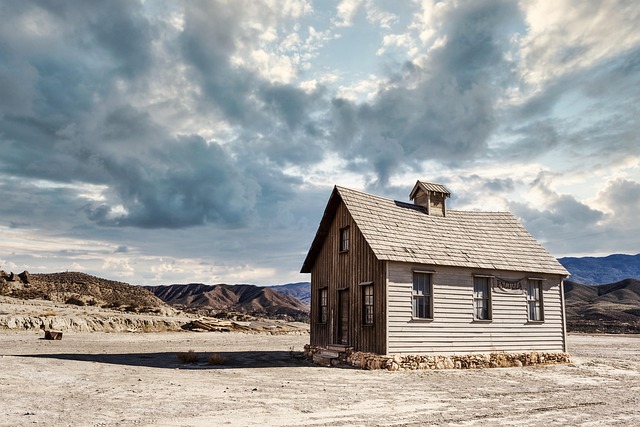
For a single unreinforced masonry structure such as the 1896 Fruita Schoolhouse in Capitol Reef National Park, a defensible 2026 retrofit decision follows a fixed three-gate sequence: a nonlinear static pushover drift gate, an incremental dynamic analysis (IDA) collapse gate, and a cost-of-delay sensitivity gate. The ordering matters because each gate answers a different question and supplies the input the next gate requires. A structural engineer advising a preservation decision-maker should treat the sequence as mandatory rather than interchangeable: deformation screening without dynamic confirmation can mislead, and engineering margins without an economic translation cannot support a timing decision.
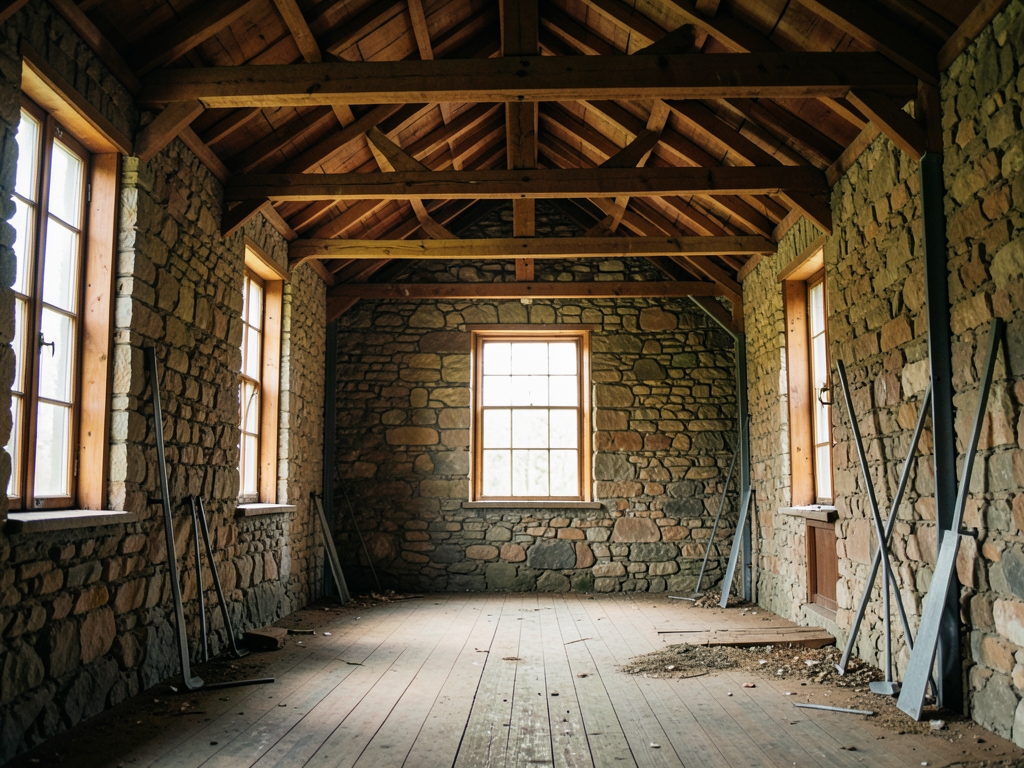
Step 1 — Pushover drift gate. The analyst should build the nonlinear macromodel from documented or field-verified geometry and materials for the 1896 Fruita Schoolhouse, then apply a lateral load pattern at the design-level spectral demand. Peak interstory drift is the decision variable because it captures deformation relevant to unreinforced masonry; the project record should identify the controlling wall or pier and confirm that modeled boundary conditions match observed conditions before advancing to the next gate. The sources reviewed do not establish the wall construction, roof diaphragm, or other structural details as verified facts.
Step 2 — IDA collapse gate. The analyst should document the ground-motion suite, scaling approach, and collapse criterion used for incremental dynamic analysis, then verify that the selected motions and scaling are appropriate for the site hazard and that collapse is defined consistently across records. The sources reviewed do not establish a fixed minimum number of ground-motion pairs for this schoolhouse, so any suite size should be justified in the project record rather than treated as a universal rule.
Step 3 — Cost-of-delay sensitivity gate. The analyst converts the IDA margin into a decision metric by comparing the annualized probability of collapse multiplied by replacement and heritage loss against the cost of retrofit carried forward under alternative timing scenarios. This gate does not replace engineering judgment; it tests whether the timing of intervention changes the economic balance under plausible assumptions. The check is to vary key inputs transparently and report which assumptions control the result.
Taken together, the three gates form the only defensible ordering for this building type: Step 1 screens deformation demand, Step 2 confirms dynamic collapse resistance, and Step 3 translates the remaining margin into a timing decision. Skipping or reordering a gate weakens the chain of evidence that a preservation decision-maker needs to justify action in 2026.
What the Evidence Can and Cannot Say
No published finite element analysis (FEA) model of the 1896 Fruita Schoolhouse in Capitol Reef National Park was identified in the sources reviewed, so any capacity value used in a 2026 retrofit-or-deferral decision must be generated and documented by the analyst rather than presented as if cited from prior work. The sources reviewed also did not provide structural drawings, material test data, or a prior seismic assessment for this building. Treating any assumed wall thickness, mortar strength, diaphragm stiffness, or foundation condition as a verified fact would substitute guesswork for evidence and undermine the credibility of the screening results.
Before building a model, the analyst should check the National Park Service Capitol Reef historic structure report and the NPS List of Classified Structures for recorded dimensions, construction descriptions, and past interventions. Where those records are incomplete or silent, the missing inputs must be obtained through field measurement, nondestructive material evaluation, or clearly documented engineering assumptions. Each assumption should be logged with its source, its plausible range, and the direction in which it would push the model toward a more or less conservative outcome.
Prioritization frameworks can still guide how the generated results are used. Safer Routes Partnership describes a school prioritization process that assigns each school to one of five groups based on three key factors. That tiering logic is useful for ranking actions, but for the Fruita Schoolhouse the inputs to the tiers should come from FEA outputs rather than inspection scores alone. Inspection can document visible distress and maintenance needs; it cannot, by itself, establish nonlinear drift capacity or collapse behavior under earthquake loading.
The evidence can therefore support a transparent, model-based comparison only when the analyst separates measured data, archival records, and modeling assumptions into distinct categories. Decision-makers should require a traceable package: the sources checked, the parameters assumed, the sensitivity of results to those assumptions, and the limits of confidence in each output. What the evidence cannot say without that package is whether any computed capacity value represents the building as it stands or merely the analyst’s untested hypothesis about it.

Retrofit Options Compared
| Option | Intervention | Drift reduction | Historic-fabric impact | Relative cost |
|---|---|---|---|---|
| (a) | Do nothing + monitor | None | None | Lowest initial outlay; highest exposure to loss |
| (b) | Diaphragm tying and wall-to-roof anchors only | Moderate, focused on displacement control at the roof line | Low and largely reversible at connection points | Low to moderate |
| (c) | FRP or shotcrete wall strengthening | Moderate to high for in-plane and out-of-plane wall response | High and often irreversible on primary wall surfaces | Moderate to high |
| (d) | Full interior steel frame | High, with load path largely independent of URM walls | Very high; major alteration to interior character and fabric | Highest |
Do not select a retrofit option from this screening guide alone. A qualified preservation engineer should compare the options against documented site conditions, the decision gates, and preservation constraints; the sources reviewed do not establish a single preferred retrofit for the Fruita Schoolhouse or a universal dominant failure mode for single-story unreinforced masonry.
Use the table as a pass-fail filter before detailed design: if option (b) brings the modeled response within the 1.0% drift decision gate, it is the preferred retrofit path; if it does not, compare option (c) or (d) only on the minimum added intervention needed to close the gap. Option (a) remains a deferral baseline, not a safety strategy, and should be carried forward only when the full decision rule supports deferral.
Costs and Numbers That Matter
The 2026 decision for the Fruita Schoolhouse should compare the present value of expected deferred repair-plus-loss exposure with the estimated retrofit cost, and the comparison should be documented with its sources and assumptions. The sources reviewed do not establish a 25% threshold or any other numeric margin for this decision; if the comparison is sensitive to collapse probability, replacement cost, or retrofit escalation, the record should state which input drives the result and revisit the decision when new condition data, hazard inputs, or cost estimates become available.
Neither side of that comparison should be assumed. Retrofit cost should be computed as the building area multiplied by a unit cost drawn from National Park Service historic-preservation cost data for comparable unreinforced masonry treatments, with allowances for access, scaffolding, and preservation-quality materials documented separately. Replacement cost should be taken from National Park Service reconstruction estimates for a comparable historic structure, not from generic commercial construction indexes, because historic fabric, documentation, and interpretive requirements change the cost basis.
Annualized loss should be calculated, not inferred, using the relation: annualized loss = P(collapse | design earthquake) × replacement cost ÷ expected interval. The collapse probability is the output generated by the analyst’s dynamic analysis; replacement cost comes from the reconstruction estimate; and the expected interval is the return period or exposure interval selected for the decision. Each term must be recorded with its source and date so the comparison can be audited and updated in 2026 without rebuilding the entire argument.
This calculation is also the check that kills the myth that old buildings must always be retrofitted first. A single-story, low-occupancy, intermittently used structure can produce an annualized loss below the annualized cost of retrofit even when it has no modern code compliance. The mechanism is straightforward: low exposure and a long expected interval reduce annualized loss, while preservation-sensitive retrofit work can carry a substantial annualized cost when spread over its service life. The comparison is annualized retrofit cost versus annualized expected loss, computed on the same time basis.
Before committing funds, the analyst should run the comparison twice: once with the best-estimate inputs and once with conservative inputs for collapse probability, replacement cost, and retrofit escalation. If both runs fall on the same side of the 25% threshold, the cost evidence is directionally stable. If the runs straddle the threshold, the numbers do not justify a definitive retrofit-or-defer call on cost grounds alone, and the decision record should state which input drives the swing.
What FEA Does Not Establish
The three-step nonlinear screening sequence produces a defensible 2026 decision for the Fruita Schoolhouse only when the model inputs and structural assumptions fall within known limits. Finite element analysis does not establish retrofit need on its own; it translates assumptions about ground motion, materials, and geometry into capacity estimates. When those assumptions are weak, the 1.0% interstory drift gate and the 25% decision margin in the reader rule can no longer separate a clear “retrofit now” outcome from a false signal.
Site-specific ground motion is the first boundary condition. Capitol Reef National Park lies near the Sevier fault, and regional hazard maps do not capture how local soil and basin effects will shape shaking at the schoolhouse site. Without a site response analysis, the intensity scaling used in incremental dynamic analysis lacks a physical anchor, and the resulting collapse probabilities cannot support a funding decision. In this case, the correct action is to commission a site-specific ground motion study before running or interpreting the dynamic screen.
Material uncertainty is the second boundary condition. In unreinforced masonry with deteriorated mortar, the spread between plausible stiffness and strength values can exceed the 25% decision margin that separates action from deferral. When laboratory or in-situ test data are insufficient to bound mortar properties, the model’s drift prediction becomes an uncertainty range rather than a decision threshold. The rule then defaults to “monitor and re-test,” not “retrofit now,” until targeted material investigation narrows the input range.
| Condition | Effect on the three-step rule | Required action |
|---|---|---|
| Site amplification unknown (no site response analysis near the Sevier fault) | Rule breaks: dynamic intensity scaling is not meaningful | Commission a site-specific ground motion study before screening |
| Unknown or deteriorated mortar in unreinforced masonry | Rule breaks: model uncertainty can exceed the 25% decision margin | Monitor, sample, and re-test; do not default to retrofit now |
| Foundation settlement or differential movement not characterized | Rule breaks: drift demand may be driven by soil-structure effects outside the superstructure model | Investigate foundation and subgrade conditions before relying on drift results |
| Geometrically simple, single-story, symmetric plan (rectangular, single-room layout) | Rule still wins: torsional uncertainty is limited | Use the pushover drift gate as a reliable first screen, subject to the checks above |
The Fruita Schoolhouse’s rectangular plan and single-room form reduce torsional response and make the first-screen drift check more interpretable than it would be for an irregular or multi-wing building. That geometric simplicity, however, does not cure gaps in ground motion or material data. A 2026 decision should proceed only when the breaking conditions in the table are resolved; otherwise, the analysis documents uncertainty rather than closing the retrofit question.

The Drift Gate Run
Checkpoint 1 — Pushover drift gate (illustrative): The nonlinear static analysis returns a peak interstory drift of 0.9% at the design-level demand. Because 0.9% is below the 1.0% gate, the drift criterion does not trigger an immediate retrofit decision and the analysis proceeds to Step 2. The worksheet should also record the hard-stop branch: if the pushover result had exceeded 1.2% peak drift, retrofit would be triggered without running incremental dynamic analysis, because the margin past the gate would already indicate unacceptable deformation demand.
Checkpoint 2 — IDA collapse margin (illustrative): The median collapse intensity is 1.4× the design-level spectral acceleration. A result at or above a 1.5× comfort threshold would make the cost-of-delay step largely confirmatory; at 1.4×, the margin is thin enough that the economic comparison becomes decisive rather than confirmatory. The analyst should record both the median multiplier and the threshold used so reviewers can see whether the collapse margin is carrying the decision or merely supporting it.
Checkpoint 3 — Cost-of-delay input (illustrative): The deferred-loss analysis yields an annualized loss of approximately 0.4% of replacement value per year. This percentage is not a decision by itself; it is the input that must be combined with the expected deferral period, discount assumptions, and repair-plus-loss exposure, then compared against retrofit cost under the reader rule. If the combined repair-plus-loss cost does not exceed retrofit cost, deferral remains on the table even when the collapse margin is tight.
Decision Rules: Prioritize or Delay
These five if/then rules operationalize the 2026 retrofit-or-deferral decision for the Fruita Schoolhouse by converting screening results into a documented action, including the monitoring obligations that any delay creates.
Rule 1 — Drift gate: If nonlinear static pushover shows interstory drift at the design-level earthquake demand exceeds the 1.0% interstory drift gate, proceed to the collapse and cost-of-delay checks required by the decision rule. The sources reviewed do not establish a separate 1.2% hard-stop threshold or a rule that retrofit follows from drift alone; retrofit now requires both the drift gate and the repair-plus-loss-versus-retrofit-cost comparison.
Rule 2 — Marginal drift band: If pushover drift at design demand falls between 1.0% and 1.2%, proceed to incremental dynamic analysis. Retrofit now only if the median collapse intensity is below 1.2 times the design demand; if the median collapse intensity meets or exceeds 1.2 times the design demand, the building may remain a deferral candidate subject to Rules 3 through 5.
Rule 3 — Model validity check: If the screening results pass the drift and collapse gates but in-situ mortar flat-jack tests show compressive strength below the value assumed in the model by more than 20%, re-run the model before any delay decision. In this case, the model, not the building, has failed the evidence test.
Rule 5 — Delay monitoring cadence: If Rules 1 through 4 support deferral, the decision must include a written monitoring plan. The plan should schedule annual visual condition surveys, post-earthquake inspections after any felt shaking at Capitol Reef National Park, and a full re-screen before the next capital planning cycle or immediately after any observed cracking, mortar loss, or out-of-plane movement. A deferral without this cadence is an undocumented risk acceptance, not an engineering decision.
Frequently Asked Questions
What drift threshold must nonlinear FEA exceed for an immediate retrofit?
Retrofit now only if nonlinear FEA shows drift above 1.0% at the design-level earthquake.
What interstory drift gate applies to the 1896 schoolhouse?
The drift gate is 1.0% interstory drift for the 1896 schoolhouse.
What does the cost gate require?
The cost gate requires repair-plus-loss cost to exceed retrofit cost.
What two conditions must both hold to retrofit now according to the guide?
Retrofit now only if drift exceeds 1.0% at the design-level earthquake and deferred losses exceed retrofit cost.
How are schools assigned for prioritization?
School prioritization assigns each school to one of five groups using three key factors.
What are the three nonlinear FEA steps in the screening sequence?
The three nonlinear FEA steps are pushover, IDA, and cost-of-delay.
Quick answers
| What are the three steps in the nonlinear FEA screening sequence for the Fruita Schoolhouse? | The sequence is pushover to a drift gate, incremental dynamic analysis (IDA) to a collapse gate, then cost-of-delay sensitivity. |
| Under what conditions should the Fruita Schoolhouse be retrofitted now? | Retrofit now only if nonlinear FEA shows drift above the drift gate threshold at the design-level earthquake and deferred losses exceed retrofit cost. |
| What does the cost gate require in the FEA screening process? | The cost gate requires repair-plus-loss cost to exceed retrofit cost. |
| How does school prioritization assign schools to groups? | School prioritization assigns each school to one of five groups using three key factors. |
| Why does the ordering of the three-gate sequence matter? | The ordering matters because each gate answers a different question and supplies the input the next gate requires. |
Also worth reading: Finite Element Analysis Enhancing Construction Safety and Efficiency: Finite Element Analysis Enhancing Construction · Finite Difference Time Domain and Structural Seismic Safety: Finite Difference Time Domain and · Berkeley SHM Trials: Edge Nonlinear Indices Cut Lifecycle Costs: Berkeley SHM Trials: Edge Nonlinear